THE PINES OF PAOLO PEJRONE
02.04.2026 LE SIRENUSE

Preferably his own, which grows and prospers east of Turin where the flat, fertile Po Valley meets the outlying foothills of what, further west, will become the Alps. Walking around the verdant Eden he has created here, words flow from Pejrone like apple blossom in a March gale.
Born in Turin, this remarkable 84-year-old is the undisputed elder statesman of Italian garden designers. But he is also, he reminds Le Sirenuse Journal, a gardener and plantsman. “It is possible to be a landscape architect without having a green thumb”, he explains. “But it's not easy to do the job unless you have at least some interest in how plants grow. Personally, I enjoy botany – I have fun with it”.
Gardens talk to Paolo Pejrone, and he talks through them. As he walks around this Mediterranean garden that has bloomed almost miraculously in one blessed corner of a region – Piedmont – that is better known for its winter frosts, olives, truffles and vines than for camelias and roses, it's as if he's communing with the members of an extended family.
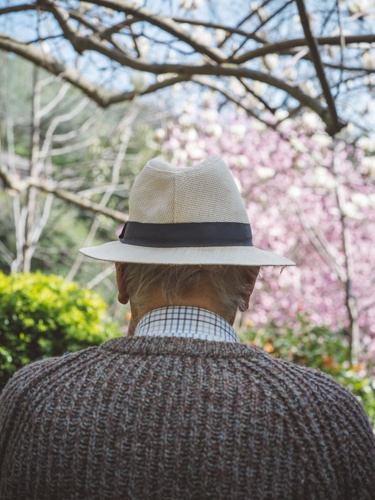
“That's a rare Chinese evergreen magnolia, Magnolia delavayi”, he says, pointing out a magnificent tree covered in apricot-pink blooms that look like crumpled silk handkerchiefs. “It was sent to me by John Hillier, an English nurseryman. It was only knee-high when I planted it in 1980, but it has found its space, the way plants usually do”.
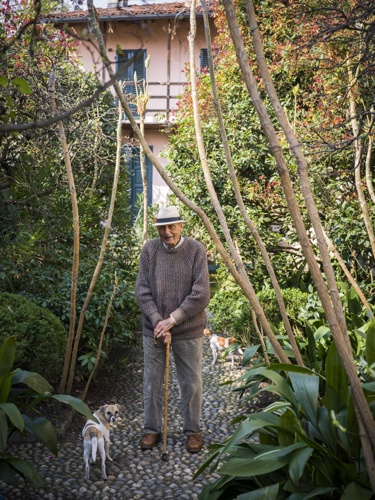
As we wander past peonies, roses, hydrangeas, cherry trees, ornamental sage, scented violets and ferns, followed by the landscape architect's two excited dogs, Pejrone spins stories of places and people, leaping from Ireland to Mexico, from Cyprus to California.
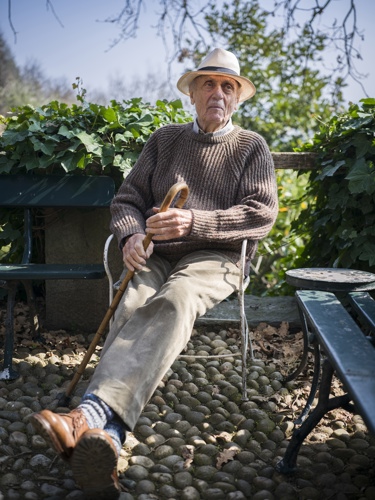
A garden, for Pejrone, is a living book of memories, passions, and lessons learnt by trial and error. It's a book that gradually starts to write itself as nature takes over and plants find a modus vivendi, some thriving, some wilting, some racing, some biding their time.
In Nerano, the veteran plantsman and designer has woven a tale of ancient Mediterranean cultures, one that leaps across civilisations and centuries. Among the citrus trees planted throughout the beach club are two local varieties of lemon, the highly scented Zagara and the rare Ovale di Massa Lubrense. For Pejrone, this is more than an homage to the flora of the surrounding area. It's a tale of far-off gardens in the Sicily of the ninth century or the Levant of the Crusaders. Both varieties, he is well aware, arrived on the Amalfi Coast in the distant past on merchant ships, or as shoots in the knapsacks of curious sailors.
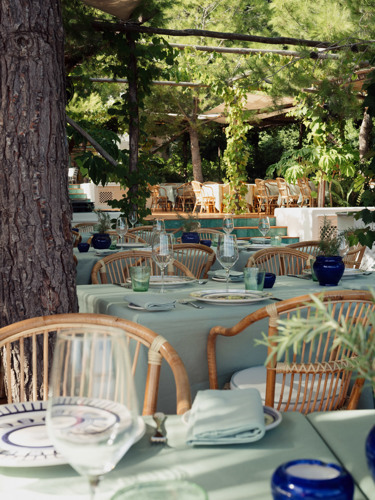
When Le Sirenuse co-owner Antonio Sersale first contacted Pejrone, both agreed that, as Sersale puts it, “we didn't want a beach club with a few plants for decoration – we wanted a garden that was also a beach club”. Le Sirenuse Mare was conceived from the start as a part of the landscape, blending in seamlessly with the surrounding tree cover and wild coastal maquis.
As a young man, Pejrone studied under the great British garden designer Russell Page. Asked what were the key lessons he took from this landscape maestro, his Italian disciple answers: “One of the most important was the need for complete sincerity between the client and the landscape architect. You need to be utterly frank, on both sides. Another was that it is crucial to know what you're talking about. There is no substitute for deep knowledge of your subject”.
In the course of a career spanning six decades, Pejrone has designed and consulted on gardens and parks for the Agnellis, the Aga Khan, Valentino and a host of other private clients. He has also curated the restoration of historic gardens such as Villa della Pergola in the Ligurian seaside town of Alassio. Working closely with his young Como-based colleague, Mirco Colzani, who directed the complex planting operation, Pejrone devised a plan for the space that would give the illusion, when seen from the sea by guests arriving by boat, of “a kind of bosco magico, a magical wood”.
The first thing Pejrone always does when visiting the site of a garden project is to look around. “You learn from what's already growing there, and what's growing nearby”, he explains. “You also need to look on the other side of the wall, to see what works and what doesn't work in the neighbour's garden”.
At Le Sirenuse Mare, two stately existing trees, a eucalyptus and an umbrella pine, were shaped and stabilised, while mature olive trees were brought in to create a shady walk on one of the upper levels, in perfect natural synthesis with contemporary artist Bosco Sodi's clay sculpture Caryatide, which stands at the far end of this enchanted grove. Borders were softly defined by fragrant flowering shrubs, among them Pittosporum tobira (Australian laurel), Murraya paniculata (orange jasmine) and Cestrum nocturnum (night-blooming jasmine). Scented geraniums and lemon verbena also spread their perfume through the air, while Hibiscus rosa-sinensis and Bignonia ‘Contessa Sara’ flowers bring vibrant splashes of red and pink colour.

View
But perhaps the most flamboyant gesture of Pejrone's plan for Le Sirenuse's new beach club was the planting of thirteen mature Aleppo pines on Le Sirenuse Mare's upper restaurant and bar terraces, which throw a dappled shade as the sun filters through their vivid yellow-green foliage. Antonio Sersale remembers vividly how, after spending a day at the site, Pejrone took the printed plan of the area and, in the space of a few seconds, marked the position of the trees that, in his mind's eye, he could see standing there.
Sitting under a spreading oak tree in his Piedmontese garden, leaning on a cane, with one of his dogs standing alert on his lap, Pejrone plays down the idea that such gestures show him to be an inspired artist as well as a garden designer. “It wasn't inspiration that made me know where to place the pines”, he explains, “it was experience. Everything has to come from experience – that's the most important factor”.

View
But the celebrated landscape architect allows himself one dazzling poetic flight when the Journal asks why his experience led him to choose Aleppo pines, and to place them exactly where he did. “They're the columns of the temple”, he states simply. “They're the columns of the Parthenon”.
Photos © Roberto Salomone
Stay up to date


A member of